
Как да изберем правилните AI инструменти за преподаване: защо педагогиката трябва да води технологиите
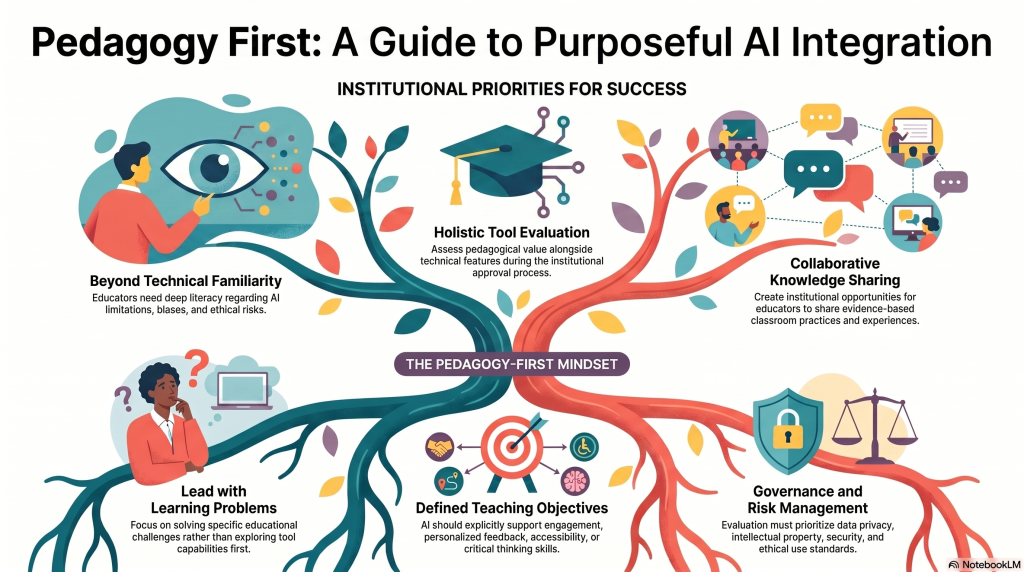
| Artificial intelligence is rapidly becoming part of higher education. Faculty members now face an expanding marketplace of AI tools promising to improve teaching, streamline administrative work, generate learning materials, provide feedback, and support student learning. Yet one of the most important questions often receives too little attention: How do educators choose the right AI tools for teaching? A recent article in Times Higher Education points out the condition for successful AI adoption is less contingent on selecting the most advanced technology and more on making informed decisions aligned with educational goals, institutional policies, and student needs. One of the article’s central messages urges educators work with pedagogy rather than technology. Instead of asking, “What can this AI tool do?” faculty should ask, “What learning problem am I trying to solve?” AI tools should support clearly defined teaching objectives, whether improving student engagement, providing personalized feedback, supporting accessibility, or developing critical thinking skills. The article also highlights the growing importance of governance and risk management. Universities must consider issues such as data privacy, intellectual property, accessibility, security, and ethical use before adopting new tools. While public AI platforms may offer impressive capabilities, institutional approval processes help ensure that faculty and students work within secure and compliant environments. Another important takeaway is the role of faculty AI literacy. Selecting appropriate AI tools requires more than technical familiarity. Educators need sufficient understanding of AI capabilities, limitations, biases, and risks to make informed decisions about classroom use. Without this foundation, institutions risk investing in technologies that fail to improve learning outcomes. Perhaps the most significant insight is that AI adoption is ultimately a human challenge rather than a technological one. Many universities already have access to powerful AI systems. The greater challenge lies in preparing faculty and students to use them effectively, critically, and responsibly. For institutions such as the University of Economics Varna, this suggests several priorities. First, AI tool evaluation should include pedagogical value alongside technical features. Second, faculty development programs should focus on AI fluency, critical evaluation, and responsible implementation. Third, universities should create opportunities for educators to share experiences and evidence from classroom practice. The future of AI in higher education will not be determined by which tools become available. It will depend on how thoughtfully institutions select, implement, and evaluate those tools in support of meaningful learning. Technology can enhance teaching, but only when educational purpose remains at the center of decision-making. | Изкуственият интелект бързо се превръща в част от висшето образование. Преподавателите днес са изправени пред все по-голям избор от AI инструменти, които обещават да подобрят преподаването, да автоматизират административни дейности, да създават учебни материали, да предоставят обратна връзка и да подпомагат ученето на студентите. Въпреки това един от най-важните въпроси често остава на заден план: как да изберем правилните AI инструменти за преподаване? |